Vagus Nerve Stimulation Devices for Stress

Vagus nerve stimulation devices for stress are non-invasive devices used to support relaxation and recovery during or after stressful periods. Explore ZenoWell auricular vagus nerve stimulation devices designed to support calm, relaxation, and everyday recovery through simple ear-based stimulation.

ZenoWell Luna Plus — Smart vagus nerve stimulation device for sleep and stress ZenoWell Luna Plus — Smart vagus nerve stimulation device for sleep and stress
-42%
ZenoWell Luna – Advanced Vagus Nerve Regulation to Light Up Natural Healing Infographic showing ZenoWell Luna vagus nerve stimulation device and reported changes in sleep quality, stress, HRV, headache intensity, fatigue, and body pain
-32%
ZenoWell Luna: Advanced Vagus Nerve Stimulation for Sleep, Stress & Relief
Sale price $409.00
Regular price $599.00
ZenoWell Vita – Activates Vagus Nerve and Paves the Way to Calm ZenoWell Vita – Activates Vagus Nerve and Paves the Way to Calm
-50%
ZenoWell Vita: Simple Vagus Nerve Stimulator for Sleep & Calm
Sale price $239.00
Regular price $479.00

What is a vagus nerve stimulation device for stress?

Vagus nerve stimulation uses controlled electrical pulses to influence pathways associated with the vagus nerve. The term includes several technologies, and the stimulation site changes what type of device you are actually using.

Implanted VNS

  1. An electrode is surgically placed around the cervical vagus nerve
  2. Medical treatment for specific conditions

Cervical nVNS

  1. Through the skin at the neck
  2. Clinical and consumer use varies by device

Auricular taVNS

  1. Selected regions of the outer ear
  2. Research and non-invasive wellness use

Implanted VNS requires surgery and clinical management. Consumer stress devices generally use non-invasive stimulation through the ear or neck.

Auricular taVNS targets outer-ear regions associated with the auricular branch of the vagus nerve. Cervical devices stimulate through the neck. For someone choosing a device, this difference affects how the product is worn, how long a session takes, whether conductive gel is needed, and how easily the routine fits into a workday or recovery period.

For stress-focused use, the relevant moment is usually when activation continues after the stressful event has ended. If a meeting is over but you still feel physically tense, mentally restless, or unable to shift attention, a calming routine may help create a clearer transition out of that state.

How do vagus nerve stimulation devices work for stress?

Ear vagus nerve stimulation

Ear-based taVNS delivers mild electrical stimulation to selected areas of the outer ear associated with vagal sensory pathways. The sensation should be noticeable but comfortable.

Stronger stimulation is not automatically better. If the sensation becomes sharp or unpleasant, the useful adjustment is usually placement, contact, or intensity rather than simply increasing power.

Autonomic regulation and stress recovery

Stress temporarily increases alertness so you can respond to a challenge. The more useful question comes afterward: how easily does your body return toward baseline once the challenge is over? The vagus nerve is involved in autonomic regulation, which is why taVNS is being studied as one way to influence stress-related arousal and recovery.
That does not mean every tense feeling reflects poor vagal activity. If your stress disappears once the situation ends, there may be little reason to add another intervention. A stress-focused device becomes more relevant when you repeatedly notice that activation lingers and you want a structured way to transition out of it.

When to use taVNS for stress

The most practical time to use taVNS is during a genuine downshift period: after a demanding meeting, between concentrated work blocks, after travel, or when a stressful task is over but you still feel keyed up.
Using stimulation while continuing to answer messages, rush through work, or consume highly stimulating content makes the effect harder to judge. Pairing it with a quieter activity such as slow breathing, sitting still, or a short recovery break gives you a clearer sense of whether the routine helps you settle.

Compare vagus nerve stimulation devices for stress

A vagus nerve stimulator for stress should fit naturally into your day. Some devices let you relax with your hands free, while others need to be held against your neck. Session times, setup, and app requirements also vary. Here's how the options compare.

Comparison Luna Plus Vita Pulsetto FIT Truvaga Plus
Stimulation Site Concha-based ear taVNS Concha-based ear taVNS Neck Neck
Typical Routine 20 minutes 20 minutes 10-minute Sleep program before bed 2-minute sessions
Device Format Ear-worn Ear-worn Hands-free neck wearable Handheld neck device
App Required? No for core modes; optional Zeno App No Yes Yes
Extra Setup Minimal Minimal Conductive gel Electrode solution
Connected Features Session history, AI guidance, additional modes, compatible HR/HRV/sleep context Standalone use App-guided programs App-guided sessions
Practical Difference More connected guidance around a standalone ear-based routine Simpler ear-based bedtime routine Hands-free cervical routine Very short handheld cervical sessions

How to use a vagus nerve stimulator for stress
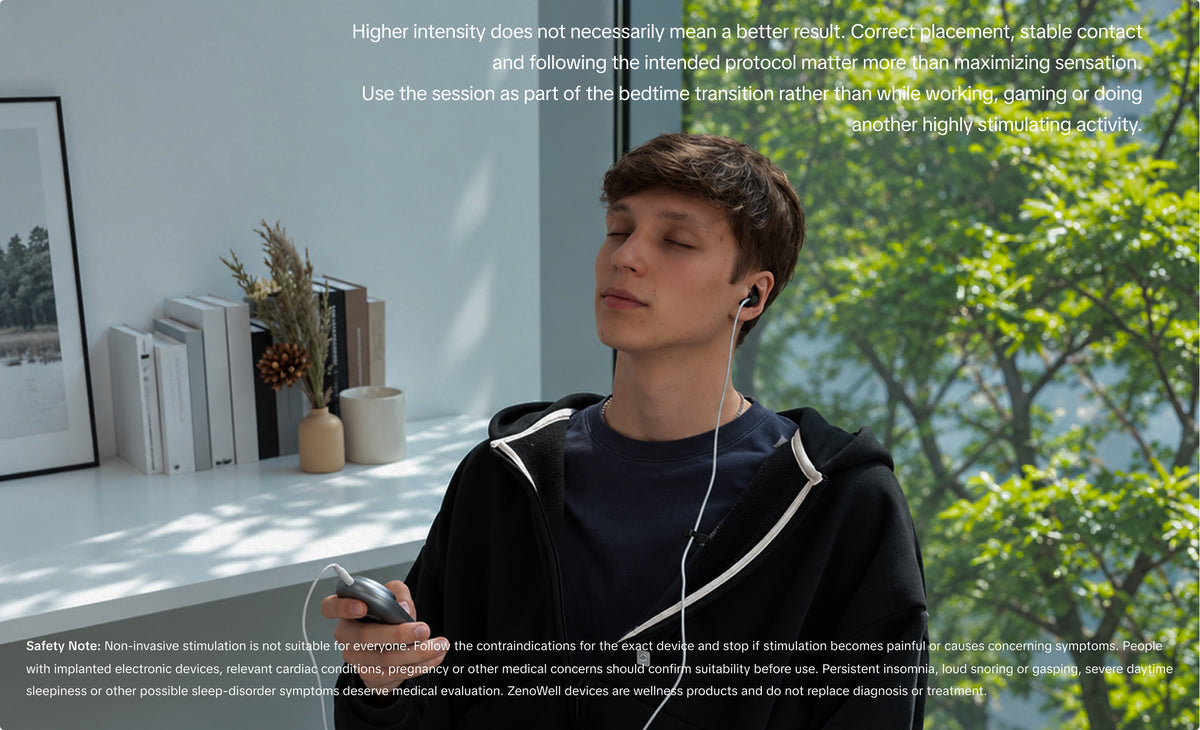
For an ear-based device:

  1. Prepare the earpiece and contact area as instructed.
  2. Position it at the device-specific ear target.
  3. Select the relaxation mode.
  4. Increase intensity until the sensation is noticeable but comfortable.
  5. Complete the recommended session during a quiet recovery period.
What does research say about taVNS and stress?

Current evidence is promising for taVNS in stress regulation, particularly for perceived stress and responses to controlled stressors, but it does not validate every consumer stress device. Human studies now include sham-controlled trials that test whether active taVNS changes stress ratings or physiological responses rather than simply asking whether people feel calmer after stimulation.

One of the more directly relevant studies came from dos Reis and colleagues in 2024. In a double-blind randomized controlled trial, 100 adults with chronic stress were assigned across active and sham tDCS and taVNS groups. Participants in the taVNS groups received five 20-minute sessions of left-ear stimulation.

After the intervention, the active taVNS group showed a greater reduction in perceived stress than the sham taVNS group, with a moderate-to-large between-group effect. The advantage was clearest immediately after treatment; at the later follow-up comparison, the difference showed only a non-significant trend.

That makes the finding more informative than a simple before-and-after improvement because active stimulation was compared with sham. However, the participants had chronic stress and sleep disturbance, and the study used a specific five-session protocol, so the results should not be assumed to apply to every consumer device or everyday stress routine.

FAQs

Do vagus nerve stimulation devices help with stress?

What Is a vagus nerve calming device?

When should you use a vagus nerve stimulator for stress?

Where should you place a vagus nerve stimulator for stress?

Can You use a vagus nerve stimulator every day?

Can You Use a Wearable Stress Relief Device During a Work Break?